Where the pipe is
Exposed in a basement is quick. Inside a tiled wall, behind a kitchen cabinet, above a plaster ceiling in a landmarked brownstone is opening, repair and a plasterer afterward.
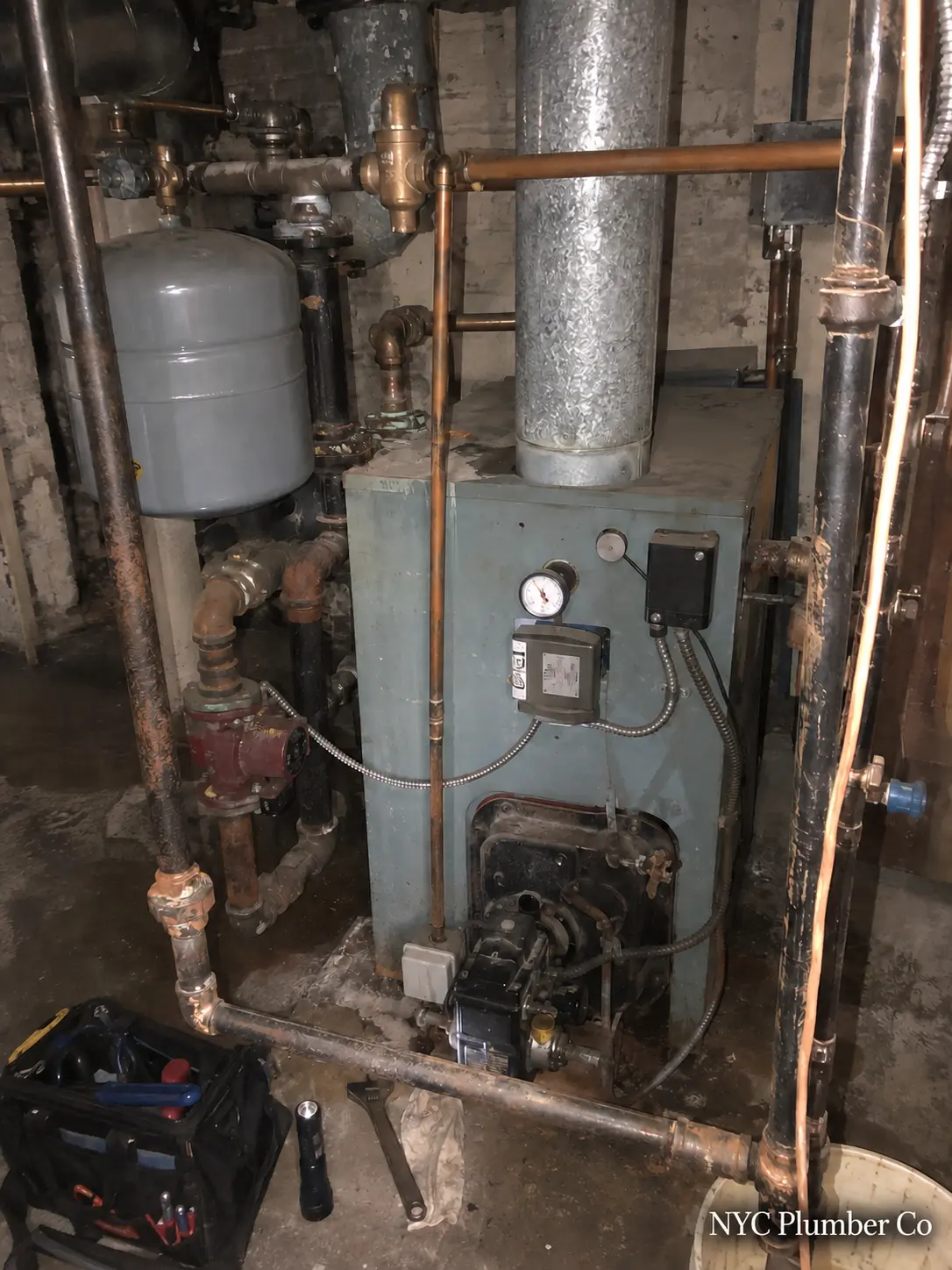
Burst copper, rusted galvanized, cracked cast iron, a riser that has been patched three times - licensed pipe repair and repiping for NYC apartments, brownstones and buildings.
Confidential · Emergencies get a call back within minutes, everything else the same day
Licensed pipe repair in NYC from NYC Plumber Co. The split section replaced, the transition done right, the pressure tested before the wall closes.
NYC Plumber Co repairs and replaces water supply, drain, waste and heating pipes in apartments, brownstones, row houses and multifamily buildings across the five boroughs. Copper, PEX, brass, galvanized steel, cast iron and lead, in buildings from 1890 to last year. Call (929) 717-4784 or request a free estimate.
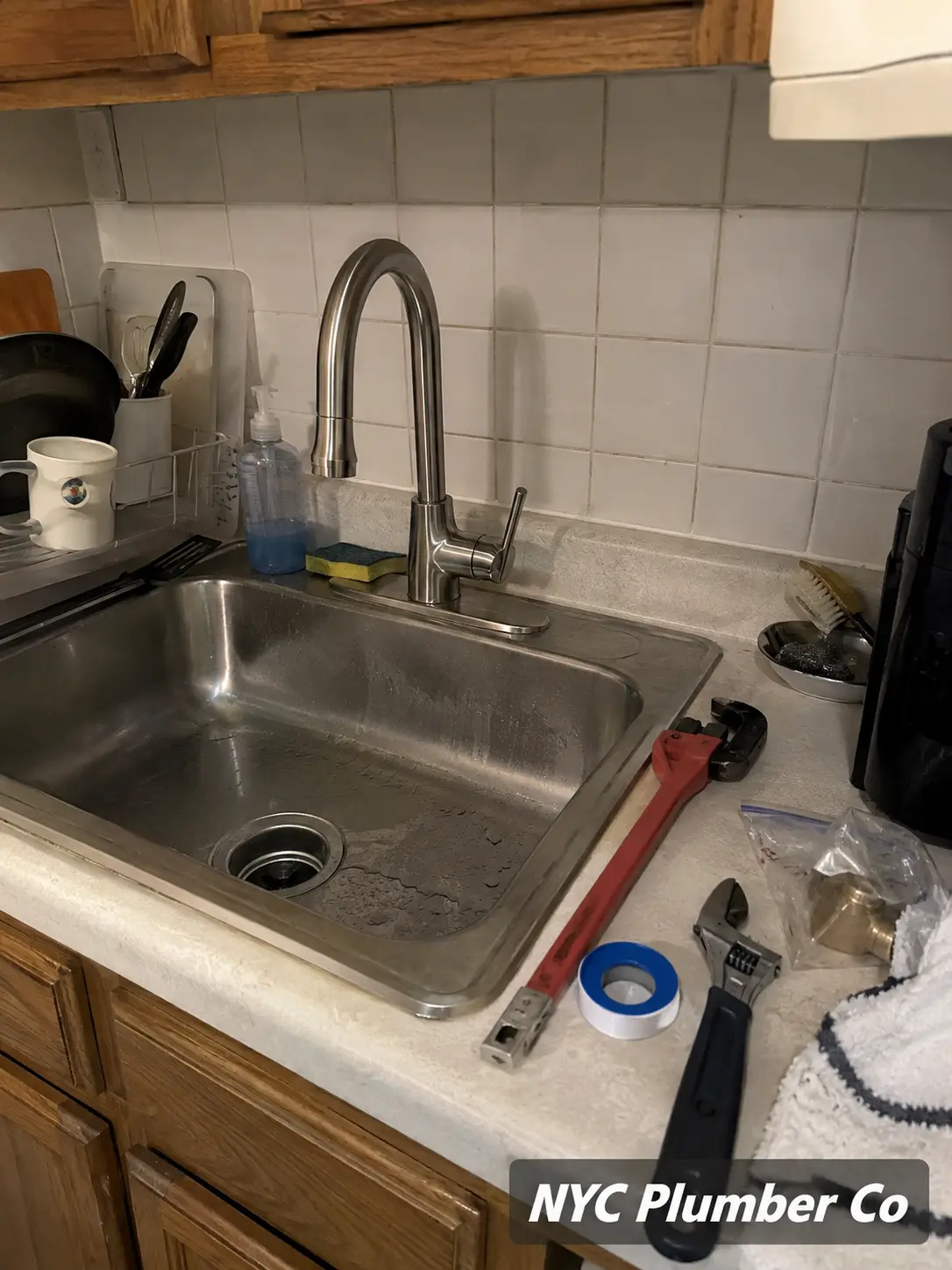
Most of the pipe in New York City was installed by someone who is no longer alive. Galvanized steel supply lines from the 1920s, narrowed to a pencil's width inside with rust. Cast iron waste stacks with lead-and-oakum joints. Brass that has gone brittle. Copper from a 1970s renovation, thin-walled, pinholing on the hot water side. And PEX from last year's kitchen job, tied into all of it with whatever fitting the contractor had in the van.
NYC Plumber Co repairs pipe across that whole range. A burst copper line behind a bathroom wall in Chelsea. A galvanized riser in a Bronx two-family that finally rusted through at the threads. A cracked cast iron stack in a Brooklyn brownstone dripping into the parlor floor. A frozen line in a Queens kitchen on an exterior wall. We cut out what failed, replace it with the right material, make the transitions with dielectric fittings or the proper couplings, and pressure test before anything gets closed.
We also repipe. When the same riser has been patched three times, when the water runs brown every morning, when the pressure on the top floor barely fills a kettle, the repair conversation becomes a replacement conversation. We lay that out with the cost of both.
Isolate
Water off at the fixture, the apartment or the riser. In a building without apartment shutoffs that means the super, the basement valve and a shutoff notice for the line. We coordinate it.
Open the smallest area that works
Behind the access panel, through the ceiling below, at the chase. Where the failure is hidden, our leak detection instruments go in first so the hole lands on the pipe.
Assess the pipe around the failure
Old pipe fails in neighborhoods. If the section next to the split is just as thin, we say so before we cut and price the longer repair, so you are not paying for two visits.
Cut and replace
The failed section removed, new pipe fitted in the same material or a compatible one. Copper soldered or pressed, PEX with proper fittings and support, cast iron with no-hub couplings, galvanized replaced with copper through a dielectric union.
Support and protect
Hangers, sleeves through masonry, insulation on lines in exterior walls, and clearance from anything that will rub.
Pressure test
Supply lines tested under building pressure before the wall closes. Drain lines filled and checked at every joint.
Close and document
The opening left clean and ready for the plasterer or tile setter, photos of the repair inside the wall for your file, and a note on what else we saw in there.
Burst and split pipes. Copper freezes in an exterior wall and splits along its length. A galvanized elbow rusts through at the threads. A compression fitting a handyman put on ten years ago finally gives up. We isolate, cut, replace and test, usually in one visit.
Frozen pipes. The line stops flowing on the coldest night, and the burst comes when it thaws. We thaw carefully with controlled heat, find the split, and fix why it froze - insulation, air sealing, moving the line off the exterior wall when that is the only real answer.
Pinhole leaks in copper. Thin-wall copper on hot water lines, especially recirculating lines in bigger buildings, pinholes from the inside. One pinhole means more coming. We repair the spot and tell you how much of the run is on borrowed time.
Corroded galvanized supply lines. Brown water in the morning, low pressure that gets worse every year, a pipe that crumbles when a wrench touches it. Galvanized-to-copper transitions need a dielectric union or the corrosion starts again at the joint. Replacing the galvanized branches entirely is the permanent fix and often the cheaper one over five years.
Cast iron stacks and drains. Cracks along the seam, rotted hubs, a section rusted through at the floor line. Repaired with no-hub couplings and new cast iron or, where the building allows it, PVC. Lead bends under toilets get replaced with new fittings and a proper closet flange.
Heating pipes. Steam risers, condensate returns, hot water loops and radiator valves. Leaks here show as rust streaks and hissing. Our boiler repair plumbers handle the heating side of the system with the same care.
Exposed in a basement is quick. Inside a tiled wall, behind a kitchen cabinet, above a plaster ceiling in a landmarked brownstone is opening, repair and a plasterer afterward.
Copper and PEX repairs are straightforward. Galvanized and cast iron take longer, because the surrounding pipe is often too far gone to thread or couple onto cleanly.
A one-foot section is a repair. A riser through three floors is a project with shutoff notices, access to other apartments and a work window.
Certificate of insurance, alteration agreements in co-ops, super scheduling, freight elevator. Manhattan full-service buildings on the Upper East Side add days of lead time, and sometimes cost.
A pipe spraying water at midnight is an emergency plumbing call at the after-hours rate. A slow drip on a basement line is a scheduled visit.
Galvanized to copper to PEX to brass in a single run, each joint made in a different decade. Every transition is a corrosion or leak point, and we correct them as we go.
Your repair touches the neighbors' water. We coordinate with the super, post the shutoff notice and work fast so the building is back on by evening.
Plaster and lath, terracotta block, marble and tile. Opening is expensive, and in landmarked buildings sometimes regulated. Precision opening matters more here than anywhere.
Roof tank buildings run low pressure at the top and high at the bottom. High-rises use booster pumps and pressure zones. Pipe and fittings that survive on one floor fail on another, and we spec for the floor we are on.
Pipe insulation is cheap. In a kitchen on the north wall of a Queens house it is the difference between a normal January and a flooded one.
Rust in the morning water means galvanized pipe rusting from the inside. The pressure goes next, then the leak.
Two repairs on the same run means the whole run is at the end of its life. The third failure comes at a worse time. We price the replacement alongside the second repair.
Angle stops and apartment mains seize when nobody turns them. A valve that turns is what makes a pipe repair a one-hour job instead of a building-wide shutdown.
Copper, PEX, cast iron or brass chosen for the building and the code, with the transitions done so they do not corrode.
Instruments first when the failure is hidden, one hole in the right place, left clean for the finisher.
Every repair, every time. A wall never closes on an untested joint.
When the pipe around the repair is as bad as the pipe that failed, you hear it before we cut, with the numbers.
Burst pipe, brown water, a leak that keeps moving anywhere in the five boroughs? Call (929) 717-4784 and a pipe repair plumber from NYC Plumber Co will take care of it.
Galvanized pipe from 1925 does not want a new fitting. It wants to retire. The honest job is to tell you that before the wrench goes on.
NYC Plumber Co
Our pipe repair plumbers cover every neighborhood below. Choose yours for local building notes and response times.
The leak located before the wall opens.
Burst and frozen pipes, any hour.
New supply lines and connections with the install.
Cast iron house drains and connections to the main.